Articles
November 19, 2025
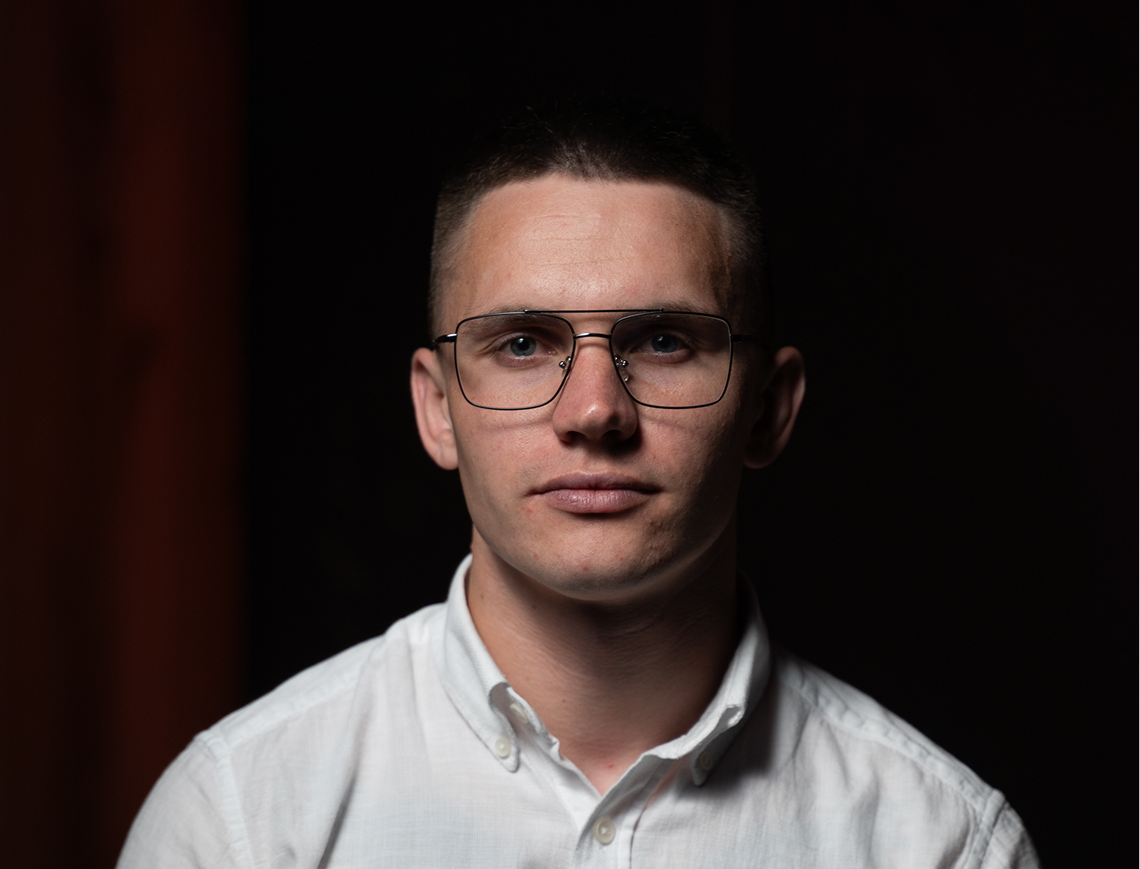
The rebuilder: How a Ukrainian veteran turns captivity into a blueprint for the future
Ivan Dibrova about his journey into the military, his career in real estate, and the significance of push-ups
Regularly ensure no new buildings or trees are casting shadows
Et tellus congue praesent pellentesque volutpat laoreet bibendum ut congue sed libero velit sed suscipit amet mattis orci aliquet egestas nibh quis neque vulputate convallis adipiscing magna. Mattis quisque in feugiat in metus laoreet sodales lectus id augue quis pellentesque feugiat luctus malesuada laoreet bibendum nibh augue fames feugiat diam sed. Varius ut eget sollicitudin sed semper sed semper sed nunc sagittis sit at sit.
- Euismod amet rutrum ornare egestas ac nunc ullamcorper mi pretium
- Mauris aliquet faucibus iaculis dui vitae litum sus ullamco
- Semper pharetra duis purus facilisis nec pretium imperdiet varius
- Molestie eget quis viverra eget eget pulvinar a donec vitae amet
Regularly check the energy output to identify any issues
Sed massa vestibulum lectus suspendisse egestas sit. Interdum vel scelerisque non imperdiet nec euismod enim tristique purus leo fames ut malesuada iaculis nunc ridiculus purus hendrerit mauris netus nunc arcu nulla hac parturient elementum proin. Malesuada commodo mi arcu sit adipiscing turpis nullam dignissim phasellus cras sagittis et sit blandit vestibulum vitae eget nulla vel dictum elementum in feugiat vel volutpat libero porta sed.

Have a professional periodically inspect and service the system
Nibh tellus arcu aliquam in pellentesque ultricies non nisi suspendisse laoreet est felis placerat bibendum nisl fermentum ut et eget lacus lectus aliquet egestas nullam suspendisse vulputate dictum tempus ullamcorper mattis ultrices suscipit ipsum vitae arcu est volutpat suscipit dolor gravida netus massa lacinia maecenas dictum facilisis eu.
- Ut est dui porttitor vitae diam cras faucibus urna diam proin ultrices
- Mauris aliquet faucibus iaculis dui vitae ullamco
- Sapien tempus nec scelerisque praesent mattis vitae commodo
- Justo at dictum fames condimentum nisl tellus mauris fermentum
Be cautious not to put stress on the panels
Nibh tellus arcu aliquam in pellentesque ultricies non nisi suspendisse laoreet est felis placerat bibendum nisl fermentum ut et eget lacus lectus aliquet egestas nullam suspendisse vulputate dictum tempus ullamcorper mattis ultrices suscipit ipsum vitae arcu est volutpat suscipit dolor gravida netus massa lacinia maecenas ictum facilisis eu.
“At scelerisque elementum vitae sed et posuere adipiscing est pulvinar id proin eget posuere odio dictumst mi interdum”
Prevent birds, rodents, and insects from nesting under panels
Sit nulla nec vitae odio orci phasellus metus diam leo est nisi morbi arcu vitae urna sit platea ligula non quis non aliquam in posuere mi egestas nunc ac vitae sed nunc auctor justo orci id ut neque ac nec. In quam eget volutpat urna consequat sit morbi tristique lobortis urna convallis lectus ac.
Follow all guidelines to maintain the warranty validity
Praesent magna turpis tellus nisl tortor est nisl nulla neque sed nisi enim cras in vitae aliquam. Posuere ultrices hac consectetur nulla odio at vitae egestas dis vestibulum risus amet viverra tortor tincidunt nascetur platea ultricies fermentum nibh nulla in lorem lectus adipiscing pretium sit condimentum nullam in eu in lorem cras proin.
When Ukrainian veteran Ivan Dibrova speaks about reconstruction, his approach extends beyond infrastructure. He frames recovery as a social and ethical process — one that begins with restoring dignity, trust, and the capacity to believe in life again. Having spent three years in Russian captivity, the former marine reconnaissance officer understands, perhaps more than most, what it means to lose everything and to start from nothing.
Today, Dibrova resides in Vinnytsia, a mid-sized city in central Ukraine, which has become both refuge and workspace. He works in real estate, leads a small investment team, and manages Act for Freedom, a charity supporting veterans, former prisoners of war, and their families. His daily life, marked by discipline, physical training, and quiet persistence, appears ordinary. Yet behind this routine lies a profound transformation shaped by war, imprisonment, and the moral imperative to rebuild.
We spoke with Dibrova about the intersection of discipline, recovery, and innovation that defines his journey.
Dibrova’s military path was shaped early by family traditions of service. Raised in an environment that valued discipline and responsibility, he saw the armed forces not as an abstraction but as a continuity of civic duty. By the time he joined the Marines in 2020, Ukraine had already been engaged in the war for six years, and the decision to serve felt less like an act of adventure than a form of participation in national defense.
“When I got my draft notice in 2020, I showed up early — they even let me choose my unit. I picked the Marines. Why? Because I loved sports, the sea, and adrenaline. After training in Mykolaiv, I was invited to join a reconnaissance unit. The guys from there told me it would be dynamic and full of adventure. They were right.” – he smiled.
The military quickly became not only a profession but a personal framework. Dibrova adopted strict discipline, abandoned alcohol and smoking, and approached his responsibilities as an exercise in self-respect and representation:
“Soldiering is inseparable from integrity: to serve was to uphold his country’s dignity even when unseen”, – said Ivan.
During one operation, Dibrova was captured and spent the next three years in Russian detention. Those years stripped away the visible layers of identity — rank, possessions, even name — leaving only the question of how to preserve humanity under systematic degradation.
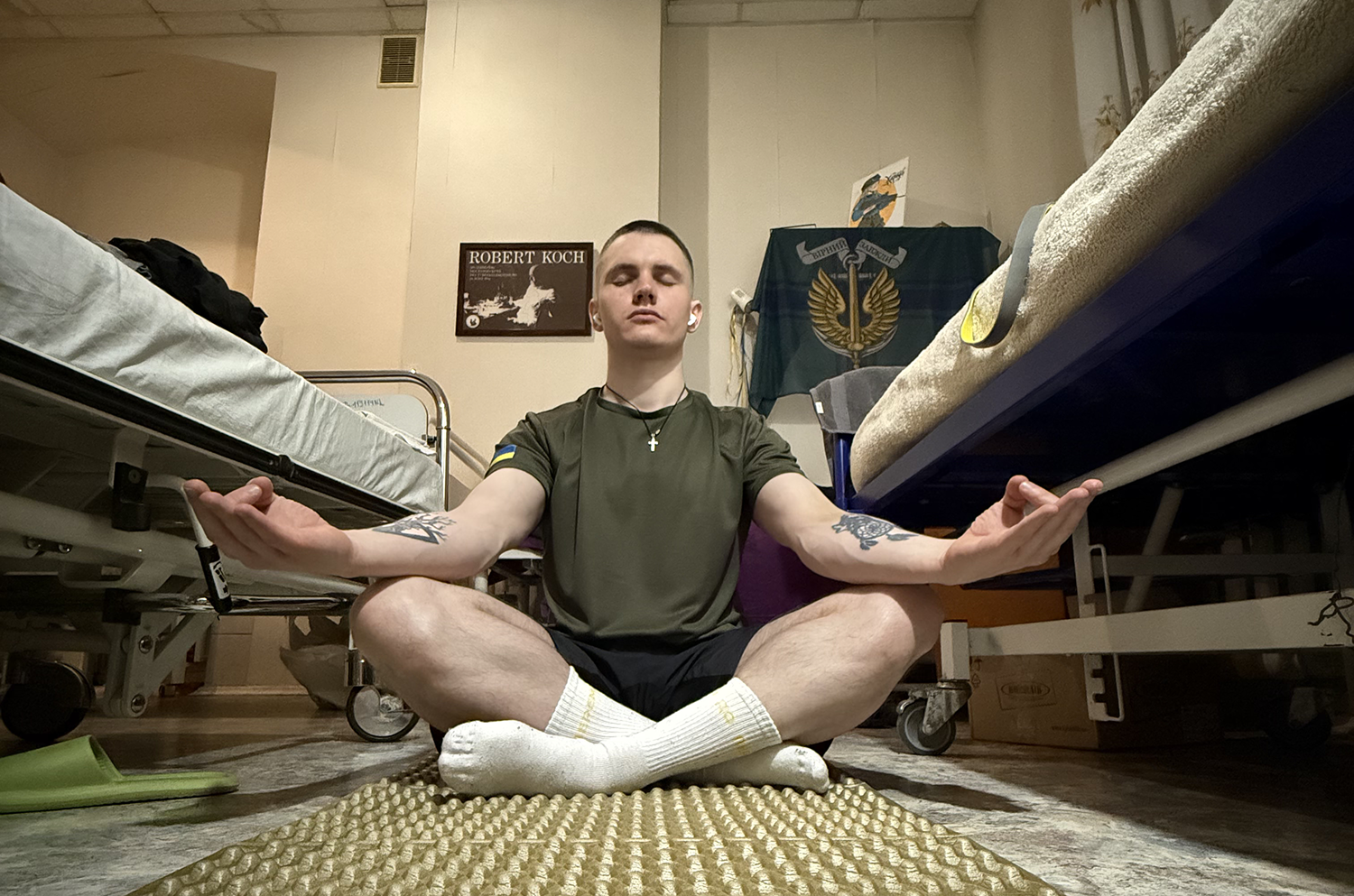
He later described this period not as suspended time but as a process of radical internal reconstruction. With little food, almost no medical assistance, and constant psychological pressure, many prisoners succumbed to despair. Dibrova responded by imposing order upon chaos through structure. He trained daily — push-ups, squats, stretches — using physical activity as both a survival mechanism and a form of silent protest.
Without medication, he survived tuberculosis largely through movement and mental resilience. This experience, he says, taught him that endurance is not only physical but philosophical — a discipline of meaning in a context designed to erase it.
Freedom brought relief but also disorientation. Returning prisoners faced bureaucratic labyrinths, incomplete medical records, and fragmented systems of state support. For many, including Dibrova, the transition to civilian life proved more complex than captivity itself.
Instead of rest, former POWs encountered administrative opacity — queues, missing documents, and unclear procedures for rehabilitation or compensation. Dibrova’s response was characteristically structured: rather than navigating the system alone, he sought to reform it through collective action.
He established Act for Freedom, a non-profit organization providing psychological support, legal assistance, and reintegration programs for veterans and ex-prisoners. The foundation also aids families of the missing. Its current project — a digital platform — will connect users with psychologists, share verified data about missing persons, and create peer-support communities.
Dibrova’s approach emphasizes that reintegration is a national priority, not a private concern. Veterans, in his view, represent one of Ukraine’s most underutilized resources for reconstruction — disciplined, adaptive, and capable of leadership.
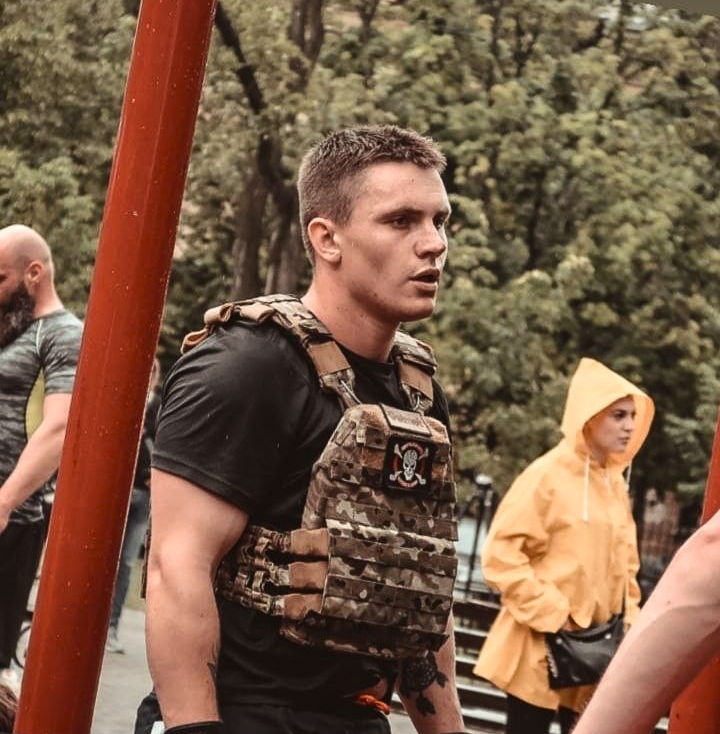
Before the war, Dibrova had trained and worked in the construction industry. Upon returning to civilian life, he reconnected with this field, joining a small real estate and renovation team in Vinnytsia. The group’s focus on practical, safe, and transparent projects provided both income and a sense of humanity.
For Dibrova, construction became a metaphor for renewal. The values that once governed life on the battlefield — precision, teamwork, integrity — translated directly to the building site. He often notes that quality materials and transparent processes in construction, like discipline in combat, can determine whether lives are protected or lost.
His ethical stance extends to sustainability. He views energy-efficient, safe housing not as a technical standard but as a moral one — a way of restoring stability to individuals and communities disrupted by war.
As Ukraine prepares for one of the largest reconstruction efforts in modern European history, Dibrova’s perspective offers an alternative to purely economic or political narratives. He argues that the speed of rebuilding shouldn't be measured by recovery, but by the quality of life that results.
In his view, Ukraine has the opportunity to leap directly into 21st-century urbanism — one that is decentralized, energy-efficient, and digitally transparent. His ideal city is both resilient and restorative: equipped with solar panels, microgrids, rainwater collection systems, and circular use of construction materials. Yet he insists that the “software” of reconstruction — education, governance, and public trust — is equally vital.
This approach aligns with broader European principles of Build Back Better, integrating sustainability with social innovation. For Dibrova, sustainability represents respect — for people, land, and time — and Ukraine’s reconstruction, if guided by these principles, could become a model of post-war transformation globally.
“My experience of war taught me that rebuilding means more than putting up new walls. We must rebuild trust, empathy, and a sense of safety. It’s not about returning to the past — it’s about leaping into the future”, — told Dibrova.
Among the ideas shaping Dibrova’s thinking is the circular economy — the principle that materials should remain in continuous use rather than becoming waste. In a country scarred by the physical remnants of conflict, this principle assumes moral and symbolic significance. Each salvaged brick or reused beam becomes an act of resistance against destruction and wastefulness.
He advocates for technologies that transform demolition waste into new resources: automated sorting systems, digital material registries, and advanced recycling plants. Such approaches, already in practice in parts of Western Europe, could be adapted to Ukraine’s context through international partnerships. For Dibrova, this is not merely an efficiency measure but a statement of dignity — converting ruins into resources and loss into potential.
He also sees veterans as essential participants in this transition. Their operational discipline and teamwork are well-suited to emerging industries in recycling, logistics, and circular construction. By integrating veterans into these sectors, Ukraine could address multiple challenges simultaneously — employment, mental health, and sustainable growth.
Dibrova’s broader message is that reconstruction is not only a technical or economic process but a civic one. It is a national exercise in ethics, inclusion, and foresight. The ultimate goal, he suggests, is not to restore what existed before February 2022, but to create a more just and resilient version of the country that will exist after.
In this sense, his own life — structured by loss, endurance, and reinvention — becomes a living metaphor for Ukraine’s transformation. The movement from captivity to creativity, from ruin to renewal, defines both personal and collective recovery.
In the logic of Dibrova’s work, reconstruction is not simply about concrete or capital. It is about designing systems — physical, social, and digital — that make dignity sustainable.
When Ukrainian veteran Ivan Dibrova speaks about reconstruction, his approach extends beyond infrastructure. He frames recovery as a social and ethical process — one that begins with restoring dignity, trust, and the capacity to believe in life again. Having spent three years in Russian captivity, the former marine reconnaissance officer understands, perhaps more than most, what it means to lose everything and to start from nothing.
Today, Dibrova resides in Vinnytsia, a mid-sized city in central Ukraine, which has become both refuge and workspace. He works in real estate, leads a small investment team, and manages Act for Freedom, a charity supporting veterans, former prisoners of war, and their families. His daily life, marked by discipline, physical training, and quiet persistence, appears ordinary. Yet behind this routine lies a profound transformation shaped by war, imprisonment, and the moral imperative to rebuild.
We spoke with Dibrova about the intersection of discipline, recovery, and innovation that defines his journey.
Dibrova’s military path was shaped early by family traditions of service. Raised in an environment that valued discipline and responsibility, he saw the armed forces not as an abstraction but as a continuity of civic duty. By the time he joined the Marines in 2020, Ukraine had already been engaged in the war for six years, and the decision to serve felt less like an act of adventure than a form of participation in national defense.
“When I got my draft notice in 2020, I showed up early — they even let me choose my unit. I picked the Marines. Why? Because I loved sports, the sea, and adrenaline. After training in Mykolaiv, I was invited to join a reconnaissance unit. The guys from there told me it would be dynamic and full of adventure. They were right.” – he smiled.
The military quickly became not only a profession but a personal framework. Dibrova adopted strict discipline, abandoned alcohol and smoking, and approached his responsibilities as an exercise in self-respect and representation:
“Soldiering is inseparable from integrity: to serve was to uphold his country’s dignity even when unseen”, – said Ivan.
During one operation, Dibrova was captured and spent the next three years in Russian detention. Those years stripped away the visible layers of identity — rank, possessions, even name — leaving only the question of how to preserve humanity under systematic degradation.
He later described this period not as suspended time but as a process of radical internal reconstruction. With little food, almost no medical assistance, and constant psychological pressure, many prisoners succumbed to despair. Dibrova responded by imposing order upon chaos through structure. He trained daily — push-ups, squats, stretches — using physical activity as both a survival mechanism and a form of silent protest.
Without medication, he survived tuberculosis largely through movement and mental resilience. This experience, he says, taught him that endurance is not only physical but philosophical — a discipline of meaning in a context designed to erase it.
Freedom brought relief but also disorientation. Returning prisoners faced bureaucratic labyrinths, incomplete medical records, and fragmented systems of state support. For many, including Dibrova, the transition to civilian life proved more complex than captivity itself.
Instead of rest, former POWs encountered administrative opacity — queues, missing documents, and unclear procedures for rehabilitation or compensation. Dibrova’s response was characteristically structured: rather than navigating the system alone, he sought to reform it through collective action.
He established Act for Freedom, a non-profit organization providing psychological support, legal assistance, and reintegration programs for veterans and ex-prisoners. The foundation also aids families of the missing. Its current project — a digital platform — will connect users with psychologists, share verified data about missing persons, and create peer-support communities.
Dibrova’s approach emphasizes that reintegration is a national priority, not a private concern. Veterans, in his view, represent one of Ukraine’s most underutilized resources for reconstruction — disciplined, adaptive, and capable of leadership.
Before the war, Dibrova had trained and worked in the construction industry. Upon returning to civilian life, he reconnected with this field, joining a small real estate and renovation team in Vinnytsia. The group’s focus on practical, safe, and transparent projects provided both income and a sense of humanity.
For Dibrova, construction became a metaphor for renewal. The values that once governed life on the battlefield — precision, teamwork, integrity — translated directly to the building site. He often notes that quality materials and transparent processes in construction, like discipline in combat, can determine whether lives are protected or lost.
His ethical stance extends to sustainability. He views energy-efficient, safe housing not as a technical standard but as a moral one — a way of restoring stability to individuals and communities disrupted by war.
As Ukraine prepares for one of the largest reconstruction efforts in modern European history, Dibrova’s perspective offers an alternative to purely economic or political narratives. He argues that the speed of rebuilding shouldn't be measured by recovery, but by the quality of life that results.
In his view, Ukraine has the opportunity to leap directly into 21st-century urbanism — one that is decentralized, energy-efficient, and digitally transparent. His ideal city is both resilient and restorative: equipped with solar panels, microgrids, rainwater collection systems, and circular use of construction materials. Yet he insists that the “software” of reconstruction — education, governance, and public trust — is equally vital.
This approach aligns with broader European principles of Build Back Better, integrating sustainability with social innovation. For Dibrova, sustainability represents respect — for people, land, and time — and Ukraine’s reconstruction, if guided by these principles, could become a model of post-war transformation globally.
“My experience of war taught me that rebuilding means more than putting up new walls. We must rebuild trust, empathy, and a sense of safety. It’s not about returning to the past — it’s about leaping into the future”, — told Dibrova.
Among the ideas shaping Dibrova’s thinking is the circular economy — the principle that materials should remain in continuous use rather than becoming waste. In a country scarred by the physical remnants of conflict, this principle assumes moral and symbolic significance. Each salvaged brick or reused beam becomes an act of resistance against destruction and wastefulness.
He advocates for technologies that transform demolition waste into new resources: automated sorting systems, digital material registries, and advanced recycling plants. Such approaches, already in practice in parts of Western Europe, could be adapted to Ukraine’s context through international partnerships. For Dibrova, this is not merely an efficiency measure but a statement of dignity — converting ruins into resources and loss into potential.
He also sees veterans as essential participants in this transition. Their operational discipline and teamwork are well-suited to emerging industries in recycling, logistics, and circular construction. By integrating veterans into these sectors, Ukraine could address multiple challenges simultaneously — employment, mental health, and sustainable growth.
Dibrova’s broader message is that reconstruction is not only a technical or economic process but a civic one. It is a national exercise in ethics, inclusion, and foresight. The ultimate goal, he suggests, is not to restore what existed before February 2022, but to create a more just and resilient version of the country that will exist after.
In this sense, his own life — structured by loss, endurance, and reinvention — becomes a living metaphor for Ukraine’s transformation. The movement from captivity to creativity, from ruin to renewal, defines both personal and collective recovery.
In the logic of Dibrova’s work, reconstruction is not simply about concrete or capital. It is about designing systems — physical, social, and digital — that make dignity sustainable.
Event Schedule
Lorem ipsum dolor sit amet consectetur. Sit ut gravida aenean potenti. Metus in eu vel morbi dui nunc tellus. Non a massa maecenas massa.